There is a reason magazine bedrooms feel so appealing: they are styled around a single job — rest. Every choice, from bedding to lighting to what is allowed on the nightstand, serves calm. You can borrow exactly that logic without turning your bedroom into an unattainable photo. A comfortable bedroom is simply one that is easy on the eyes, soft to the touch, and quiet to the mind.
Here is how to style a bedroom for comfort, one layer at a time.
Layer the bed like a nest
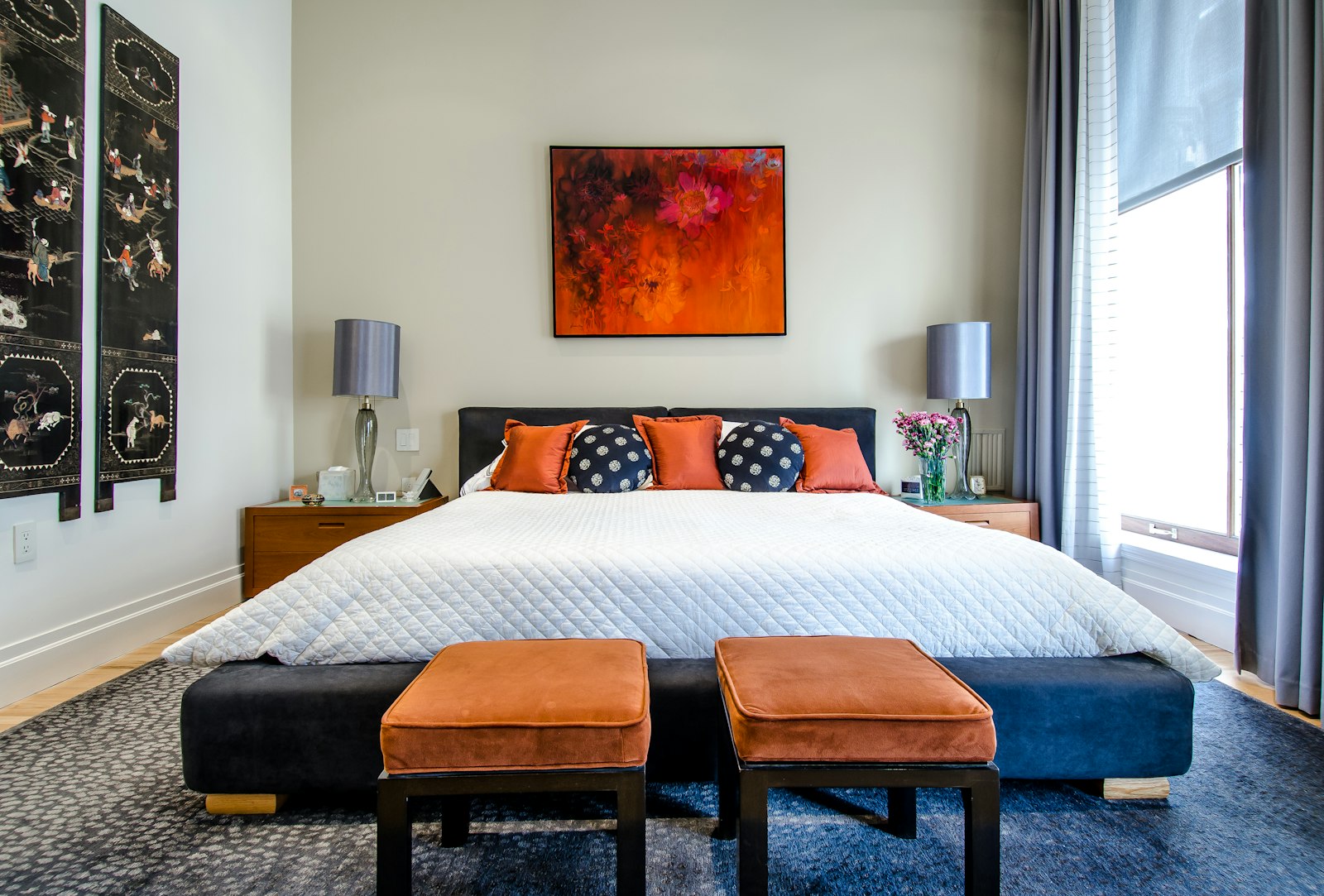
The bed is the heart of the room, and its styling should feel physically welcoming. Build layers in this order: a fitted sheet you love the feel of, a relaxed duvet or quilt, a folded throw at the foot for cool nights, and pillows arranged by how you actually sleep — not by symmetry for a photo.
Choose fabrics you want against your skin: cotton with a good thread count, soft linen, or brushed flannel in winter. When the bed looks touchable, the room reads as comfortable before you even climb in.
Keep the palette soft and the pattern limited
Sleep research may change, but one room principle will not: visually busy bedrooms are harder to unwind in. Keep walls and large bedding in soft, muted tones, and reserve pattern for small elements — one patterned cushion or a printed throw rather than patterned everything.
This is where the calm color method applies in miniature. Pick a gentle neutral family, add one muted accent tone, and let the room stay quiet.
Cut the visual noise at eye level
A tidy bedroom is a calm bedroom, and the clutter that disrupts rest is usually at eye level: surfaces, shelving, and chairs. The most calming bedrooms have one or two clear surfaces at most — largely the nightstands and the bed itself.
Give every surface in the room a small, defined job and let the rest be empty. If a chair has become a mountain of \u201clater\u201d clothes, either hang them or move them out — a chair of clothes is the single most common reason a bedroom stops feeling restful.
Light for winding down, not just for seeing
Harsh ceiling light is the enemy of a calm evening. Install or add dim, layered lighting: warm bedside lamps with soft shades, a small reading light, perhaps a dimmer on the overhead. In the evening, light should come from below eye level, low and golden.
If you cannot rewire, a simple pair of bedside lamps and a rule to switch them on instead of the overhead transforms the atmosphere instantly — see our nightstand styling guide for making that corner feel intentional.
Add texture you want to touch
Comfort is a tactile word. A chunky wool throw, linen curtains that brush the floor, a sheepskin or soft cotton rug beside the bed, velvet cushions — each one invites touch and tells your body \u201cslow down.\u201d Aim for at least three distinct textures in the room, layered not competing.
Feature one piece of art or greenery
After the noise is cut away, give the eye one thing to rest on: a favorite print, a framed photo, or a low-maintenance plant on the dresser. A single, well-chosen focal point prevents the room from feeling empty and gives it a sense of personality without stimulating clutter.
Finish with a wear-it-in approach
Once the room is styled, resist the urge to keep arranging it. Bedrooms look finished when they look lived in — a book on the nightstand, a glass of water, the duvet pulled up crooked at the foot of the bed. The goal is a space that welcomes you at the end of the day, not a display you are afraid to touch.