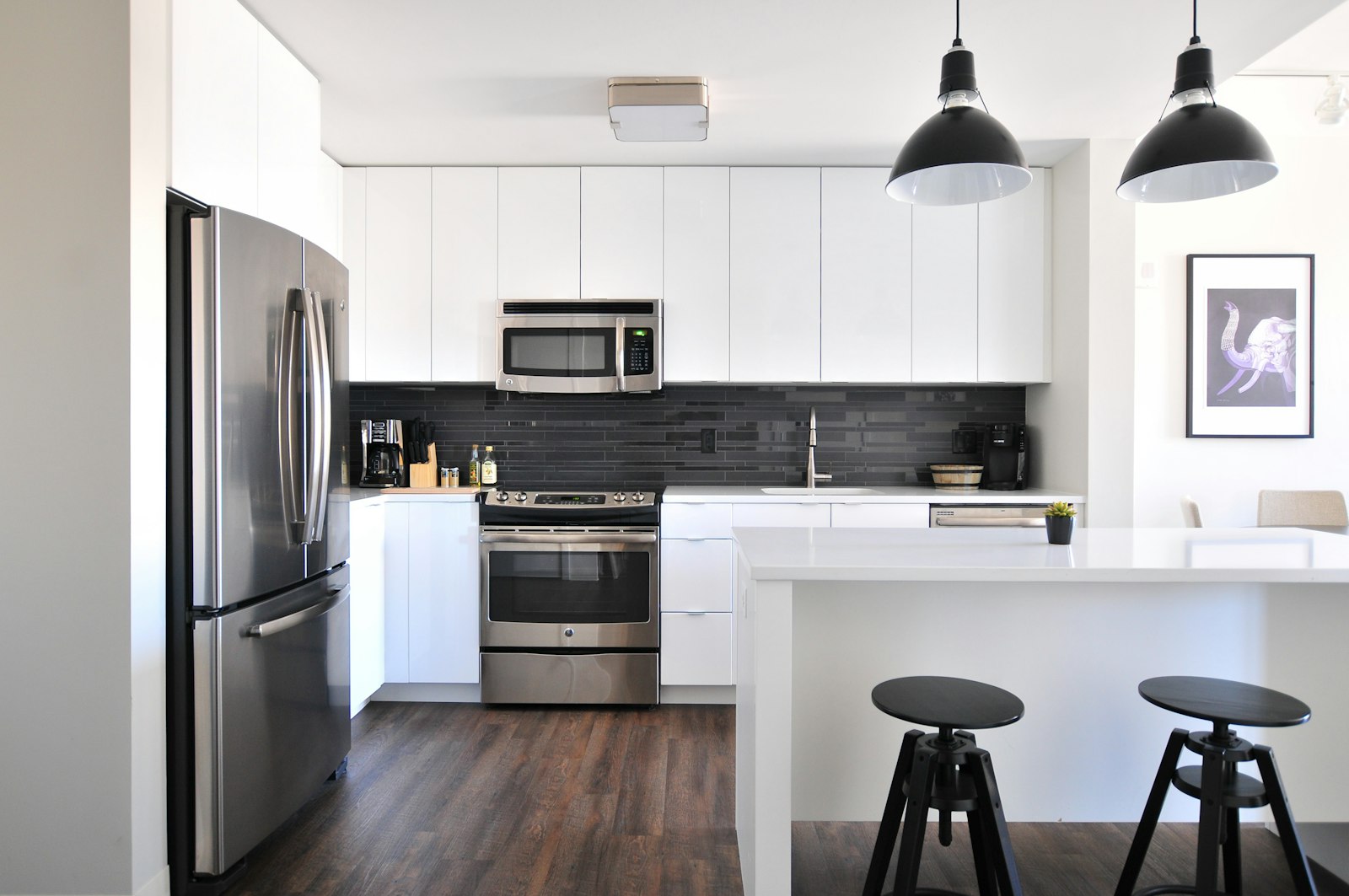
Open a kitchen magazine and the counters are always bare — a pretty bowl of lemons, a single kettle, nothing else. Real kitchens are busier than that, but there is a middle ground between magazine-empty and disappear-under-clutter. Clear countertops make cooking easier, make the kitchen look bigger, and create an instant sense of calm.
Here is the step-by-step process for organizing kitchen counters that works with how a busy kitchen is actually used.
Define what a counter is for
Start by deciding what each counter area exists to do. There is usually a prep zone, a cooking zone beside the stove, a landing zone near the refrigerator, and sometimes a coffee or small-appliance zone. Every zone should have one primary job, and the surface within that zone should stay mostly clear so it can do that job.
If a counter has no assigned job — it is just \u201cspace\u201d — that is where the clutter collects. Either give it a purpose or stop storing things there.
Clear everything off and sort into three groups
Take everything off the counters at once. Now you can see what actually lives there, and you can sort it honestly:
- Daily-use items — things you reach for every single day, such as a kettle, toaster, or olive oil beside the stove.
- Occasional-use items — appliances and tools used weekly or monthly that can live in a cabinet, a pantry shelf, or a storage bin above the cabinets.
- Moved-to-live-here items — decor, mail, kids\u2019 schoolwork, and everything else that drifted onto the counter without a purpose.
Be honest with the \u201cmoved-in\u201d group. If you have not used the stand mixer or the third cutting board in a year, move it to a cabinet or rehome it. Counter space is the most expensive storage in the house — use it for what earns it daily.
Apply the \u201cfirst sixty centimetres\u201d rule around the stove
The area within about sixty centimetres (two feet) of the stovetop is prime cooking real estate. Keep it down to the essentials: oil, salt, and the everyday spatulas on a wall rail or in a narrow caddy. Everything else on that strip interferes with cooking and gets splattered.
If you cook often, this one change does more for kitchen enjoyment than any storage purchase you can make. See it as protecting the work zone, not losing storage.
Give every counter item a tray or home
The items that do belong on the counter are less cluttered when they are grouped. A coffeemaker plus its mugs and beans reads as one \u201cstation.\u201d Group related small appliances and tools on a tray or in a corner stand, so a cluster of objects looks intentional instead of accidental.
The same logic applies to food: a bread box, fruit bowl, and canister trio form a neat kitchen focal point, while nine loose bags of snacks scattered along a counter do not.
Create a landing zone for incoming items
A kitchen counter near the entry from the garage or the front door will always collect incoming items. Instead of fighting it, give it a designated landing zone: a tray or shallow bin for keys, mail, and grocery bags that need attention. When the tray is full, it is cleared. Bounding the chaos to one tray keeps the rest of the counter clear.
When to buy storage — and what to buy
Buy storage only after you have cleared and sorted, otherwise you are organizing clutter into fancier containers. When you do shop, favor solutions that rise vertically in kitchens: a wall-mounted rail for utensils, wall racks for cutting boards, stacked shelves for canned goods, and pull-out bins in deep cabinets.
For the pantry and the cabinets themselves, clear containers with visible contents beat opaque boxes, because you can see what you have and what is running low.
Keep going with the whole kitchen
Once the counters are calm, move through the rest of the kitchen the same way — one category at a time, keeping only what you use. If you are working on a small kitchen or a busy-household schedule, our guides on organizing small homes and decluttering for busy households will keep the momentum going without a weekend purge.